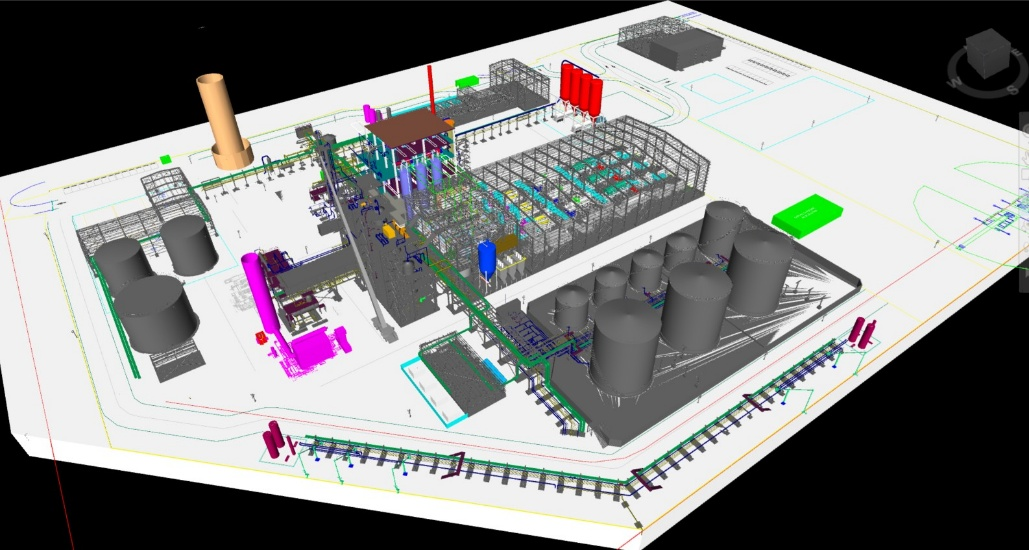
Brussels, 16/06/2026 – SynPet Technologies, the Belgium-based advanced recycling company, has received the environmental and construction permit for its flagship facility in the Port of Antwerp-Bruges, marking a major milestone in the development of what is expected to be one of Europe’s largest advanced recycling facilities currently under development.
The permit represents a significant de-risking event for the project and clears the way for the next phase of development. Once operational, the facility will process up to 250,000 tonnes of mixed plastic waste annually and produce circular naphtha substitute for the petrochemical industry, helping transform difficult-to-recycle waste streams into valuable circular feedstocks that support Europe’s growing demand for recycled content.
A major milestone for SynPet’s long-term vision
The permit marks an important step in SynPet’s ambition to help close the loop on plastics by creating circular alternatives to fossil-based feedstocks. Since its inception, the company has focused on developing technologies capable of addressing plastic waste streams that remain outside the reach of conventional recycling methods.
Through its patented Thermal Conversion Process (TCP®), SynPet has demonstrated how advanced recycling can unlock value from hard-to-recycle mixed plastic waste while supporting the transition towards a more circular plastics economy. The Antwerp project represents the company’s first full-scale industrial deployment and a major step towards bringing its technology to commercial scale.
Ilyas Cem Ozsuer, CEO of SynPet Technologies: “This permit is an important validation of the work our team has carried out over many years. Developing a first-of-a-kind industrial project requires persistence, long-term commitment and the willingness to overcome technical, regulatory and financing challenges. Today, we are one step closer to demonstrating that advanced recycling can play a meaningful role in the future of circular plastics.”
Furkan Ahmet Callialp, COO of SynPet Technologies: “Receiving this permit allows us to transition from development into execution. Over the past years, we have worked closely with technology partners, engineering teams, regulators and industry stakeholders to establish a project capable of operating at industrial scale. Antwerp offers a unique combination of logistics infrastructure, feedstock accessibility and integration with Europe’s largest petrochemical cluster. We are now focused on advancing the project towards final investment decisions and delivering one of Europe’s largest advanced recycling facilities.”
Ruth Sandelowsky, CEO of Kolmar Group AG: “The SynPet technology operates at a true commercial scale, producing a differentiated product and widens the recycling circularity envelope. This enables the chemical industry in Europe to make a significant push towards meeting both European Commission targets and consumer led demand. Kolmar is delighted to partner with SynPet, Euroports and the Port of Antwerp to open a new chapter in circularity.”
Advanced recycling enabled by Europe’s circular economy agenda
The granting of the permit comes at a pivotal moment for Europe’s circular economy. Through initiatives such as the Circular Economy Action Plan (CEAP), the Packaging and Packaging Waste Regulation (PPWR), and increasingly ambitious recycled-content targets, the European Union is creating a clear policy framework that supports investment in advanced recycling technologies.
These legislative developments are driving growing demand for high-quality circular feedstocks while encouraging the development of recycling solutions capable of processing plastic waste streams that cannot be effectively recycled through conventional mechanical methods. Advanced recycling is increasingly recognised as a complementary pathway that can help close material loops and maximise the value recovered from post-consumer plastics.
SynPet’s Antwerp facility is designed precisely for this challenge. The Antwerp facility will accept waste plastics that is currently ending up in landfills or incinerators. By converting such mixed plastic waste into circular naphtha substitute suitable for integration into existing petrochemical value chains, the project will help increase the availability of circular raw materials needed to meet Europe’s long-term sustainability and recycled-content objectives.
The facility will produce circular naphtha suitable for integration into existing steam cracker infrastructure, enabling downstream manufacturers and brand owners to increase the use of recycled content in plastics while supporting compliance with evolving European circularity requirements.
The permit, therefore, represents more than a project milestone. It reflects the growing alignment between industrial innovation, market demand and European policy ambitions. As regulatory clarity continues to improve, projects such as SynPet Antwerp demonstrate how advanced recycling can move from demonstration to industrial-scale implementation, supporting Europe’s transition towards a more circular and resource-efficient economy.
Antwerp as a strategic hub for circular feedstocks
The Port of Antwerp-Bruges was selected for its unique combination of logistics infrastructure, industrial capabilities and direct access to one of the world’s largest petrochemical clusters. The location provides an ideal platform for integrating circular feedstocks into existing value chains and supporting the growing demand for circular raw materials within the European chemicals industry.
By connecting waste management with petrochemical production, SynPet is positioning itself as a pioneering European player in the development of circular feedstocks and the transition towards a more circular chemicals value chain.
Furkan A. Callialp concludes: “The circular economy will ultimately be built on industrial-scale solutions. Our Antwerp project demonstrates that advanced recycling is no longer a future concept—it is becoming critical infrastructure for Europe’s transition towards circular materials. We are proud to contribute to that transformation from the heart of Europe’s chemical industry.”
About SynPet Technologies
SynPet Technologies is an international cleantech company with R&D centres in Belgium and Türkiye. Since 2012, the company has developed its patented Thermal Conversion Process (TCP®), which converts hard-to-recycle plastic waste into high-quality circular feedstocks such as Circular Naphtha Substitute (CNS®). Following successful demonstration-scale operations, SynPet is now progressing towards industrial commercialization through the development of its first full-scale facility in the Port of Antwerp-Bruges.
For more information, visit www.synpet.com
***
Press contact
SynPet Technologies:
Gunther De Backer
Partner, Backstage Communication